
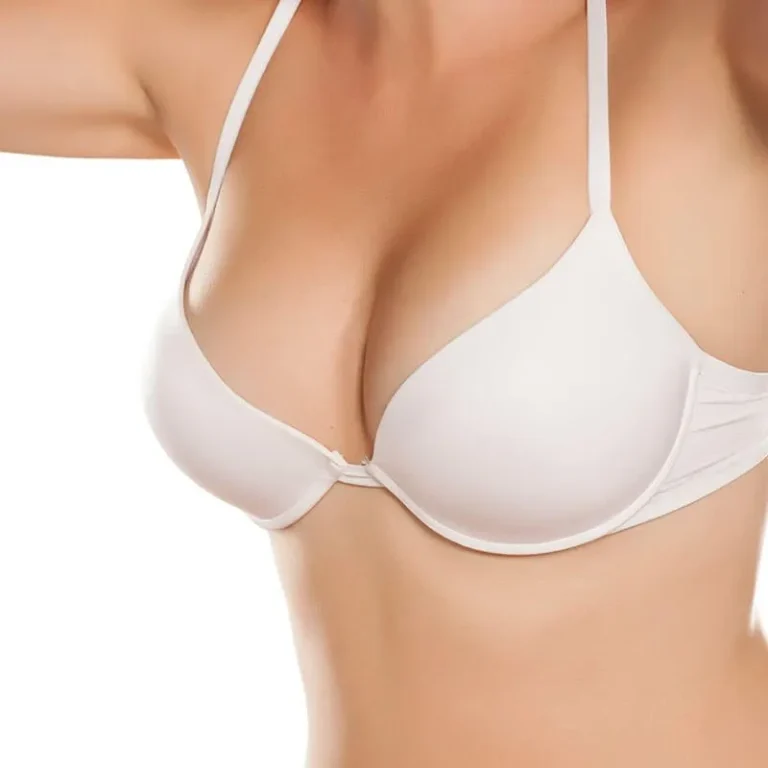

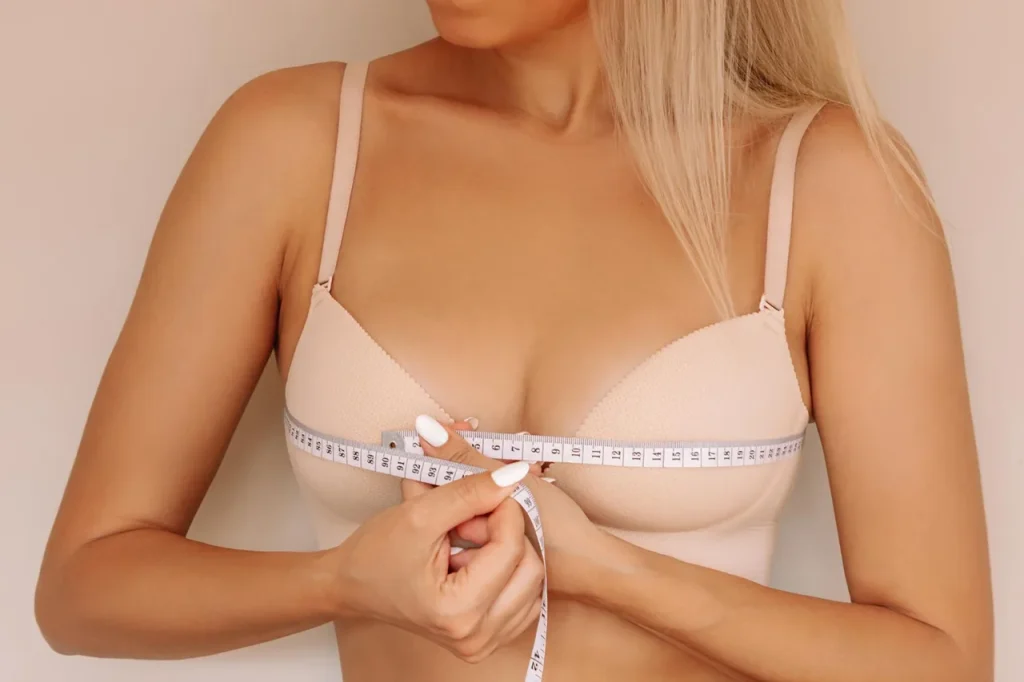
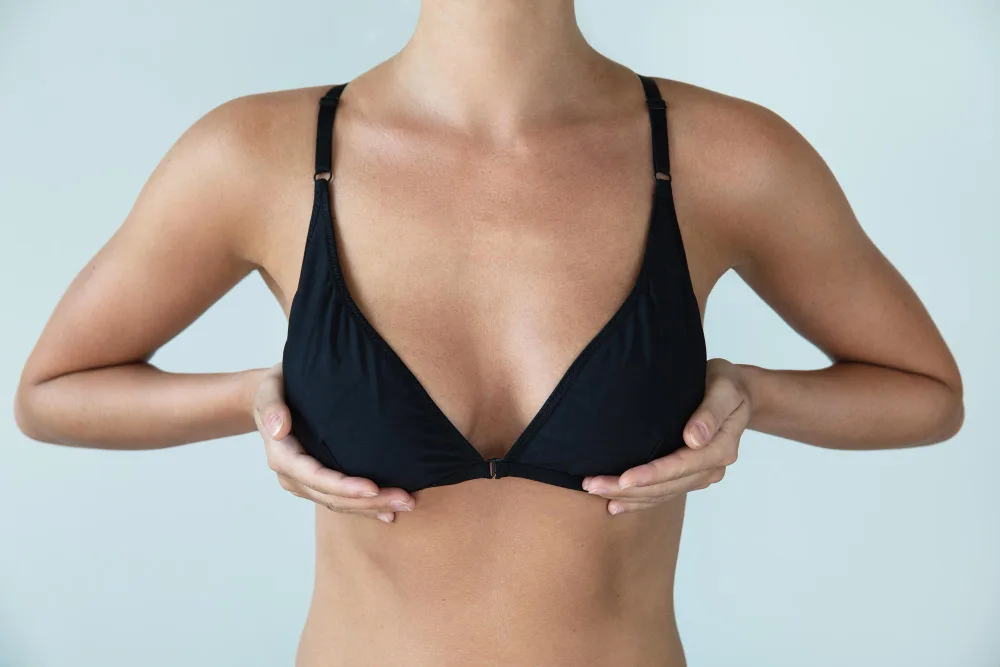
Many women who come to my practice wishing for a breast augmentation have a precise idea of their dream breasts, some even have a very specific bra size in mind and would like my professional opinion on whether it suits them. The range extends from a subtle A or B cup to a feminine C or D cup.
From my experience as a plastic and aesthetic surgeon, the answer to this question is usually: It depends. Every woman’s body is unique in its proportions. These must be taken into account when finding the optimal breast size, as must personal wishes and other factors. After all, large breasts should not later become a burden and restrict a woman in her everyday life, nor should small breasts cause dissatisfaction after the operation.
Finding the right breast size is therefore a careful process, for which I take a lot of time before every treatment. So that you can get an idea of it, I have described the typical process of choosing the ideal breast size and shape in this article.
Cup size (bra size) is not the be-all and end-all
“Dr. Nichlos, I would like an 85C.” I hear this or something similar quite often in my consultations. This example, 85C, is a bra size made up of a letter (A, B, C, etc.) and a number (underbust circumference in cm).
Contrary to popular belief, however, bra size is not a universal unit of measurement. In fact, a 75A, 80B or 90C can turn out surprisingly different in fit and volume depending on the bra brand and model. You may know this yourself from trying on different models in a department store. For this reason, cup size is only of limited use for planning breast surgery.
Regardless, in my opinion it is not reputable to have only a certain cup size in mind for a breast augmentation. It is much more important to shape breasts that fit naturally into your body image, suit your lifestyle optimally and make you happy in the long term.
Anatomical requirements
As mentioned at the beginning, every woman’s body build is unique. That is why an enhancement must always be planned very precisely and on the basis of your personal anatomical requirements. In breast augmentation with implants, I look above all at the breast base, the proportions and body build, and the condition of the skin and tissue in the breast area.
Breast base
The breast base (also called base width) describes the natural width of the breast at the point where it rests on the chest wall. It essentially dictates the width of the implant. To achieve a harmonious result, the width of the implant must match the base width optimally. An implant that is too wide would show up laterally under the arm as an unnatural bulge and, over time, would not only be visually bothersome but also noticeable. If the implant is too narrow, on the other hand, it cannot fill the entire breast and looks oddly “stuck on”.
Proportions/body build
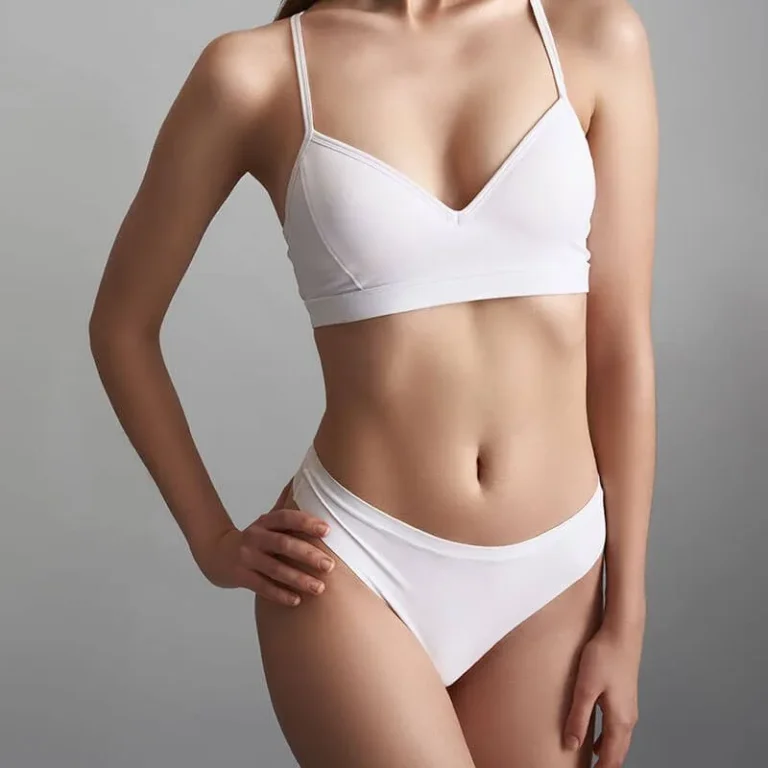
Another essential factor is harmony. That is why, in breast surgery, I always look at the entire figure, from height and shoulder width to the ratio of waist to hips. This also applies, incidentally, to a breast reduction.
If the proportions are not right (for example, a very petite, slim woman with a very large implant, or a very curvy woman with a very small implant), the result can quickly look unnatural. To prevent this, I pay very close attention to including your body shape in the consultation before breast surgery and to showing you how we can best emphasize your feminine contours and help you get a dream décolleté.
Skin and tissue
Finally, when choosing an implant, the condition of the skin and of the glandular or fatty tissue must also be considered. This concerns in particular the quality and elasticity of the skin. It determines how well an implant can be covered and supported. If the implant is too heavy, for example, the skin can overstretch and make the edges of the implant visible, which we absolutely want to avoid. Depending on the condition of the skin and tissue on the upper body, different placements of the implant (above or below the pectoral muscle) are also an option.
Your personal wishes
After the anatomical requirements have set the frame, so to speak, for what is possible or sensible in breast surgery, it is about your personal wishes and ideas. Only if you feel completely comfortable with your breasts are they truly perfect.
In a personal consultation, I therefore want to get to know your needs and aesthetic goals. In other words: What exactly do you want to achieve with the operation? Do you want a very subtle and natural result in which only volume lost through pregnancy or major weight loss is restored? Or do you dream of a fuller, more sensual décolleté that emphasizes your femininity?
Your lifestyle must also factor into the thinking about the perfect cup size. Especially for very athletic women who regularly go to the gym, run a lot, ride horses or dance, the size and weight of the implant play a big role. During intensive training sessions, large implants can quickly be felt as disruptive and can even limit activity. An implant must not do that. On the contrary, it should enrich your well-being and your everyday life, strengthen your self-confidence and not become a burden to you.
Depending on the stage of life you are in, the shape and size of the breast can still change, for example through pregnancy or the natural aging process of the skin. These events can cause the skin to loosen, and the risk of this is significantly greater with a very large and heavy implant because the skin is under more strain.
The right implant: volume, shape, profile
Once we have taken your anatomy and your personal needs, wishes and ideas into account, it is time to choose the suitable implant. Not only the size, or rather the volume, plays a role, but also the shape and profile of the implant. These vary depending on the model and can be selected individually.
Volume
From experience I know: The volume of the breast, which is given in cubic centimeters (cc or ml) in plastic and aesthetic medicine, is hard to imagine for most patients. Here the term bra size or cup size can perhaps help after all, as it is closer to everyday life, for example in the form of “cup size A to B”.
As a rough guide: An increase in volume of about 150 to 200 ml corresponds to an increase of approximately one cup size. The bigger the jump, the more noticeable the visual change and the more elastic and stable the skin and tissue must be.
An example from my practice: Many patients who wish for a breast augmentation want to go from an A cup to a full B cup at first. This corresponds to an increase in volume of approx. 250 to 300 ml and looks very natural. Of course, it is also possible (and not at all rare) for women to want a larger and clearly visible change and to go from cup size A to a medium C cup. This change generally gives the breast more fullness but, as mentioned, requires corresponding skin and tissue stability.
Shape
In principle, two implant shapes can be distinguished: round and anatomical. Round implants provide evenly distributed volume in the breast, especially in the upper area. Anatomical implants are teardrop-shaped and thus modeled on the natural breast shape. Unlike round implants, they have a gentler transition at the upper edge and more volume in the lower half.
Profile
The profile of an implant is responsible for the projection of the breast. Implants can be identical in volume and shape but, because of a different profile, look and feel very different. To illustrate: Imagine two round glasses that each hold the same amount of liquid (for example 500 ml), but one is tall and narrow and the other low and wide. Implant profiles work in a similar way: High profiles project further forward and make the breast bulge noticeably. The result: The breast looks significantly more voluminous.
Unsure about the perfect cup size? Get professional advice from a specialist
You want more breast but are unsure which cup size suits you? Even if you have already heard opinions from your partner, your friend or relatives, you should also seek the advice of a plastic and aesthetic surgeon. I offer you:
- A neutral view of your wishes and ideas. My goal is to find the breast size and shape for you that harmonizes perfectly with your body and with which you feel comfortable.
- Individual and personal consultation without time pressure at my practice in Frankfurt, with a detailed examination and, on request, before-and-after photos.
- Creation of an individual treatment plan should you decide on breast surgery, including a transparent cost estimate, of course.
- Comprehensive aftercare with regular follow-up checks. If questions come up after the operation, I am also always happy to be available to you personally.
Schedule a non-binding consultation now by phone or through my contact form, and let us find the optimal size and breast shape for you together.
Dr. Nichlos on Instagram & TikTok
Insights into everyday life at the practice, answers to frequently asked questions and useful information about plastic and aesthetic surgery: follow Dr. Nichlos so you do not miss anything.