


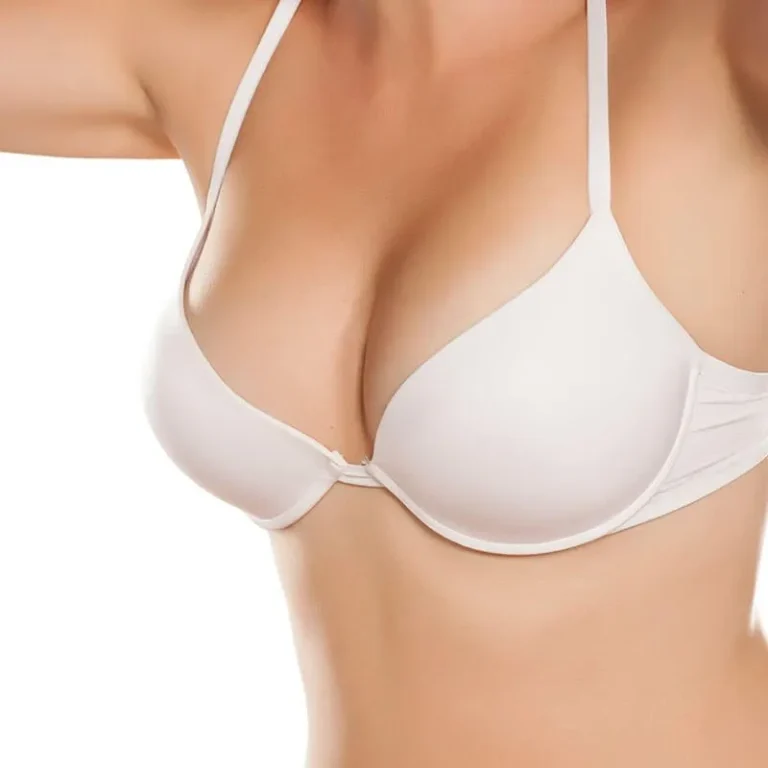

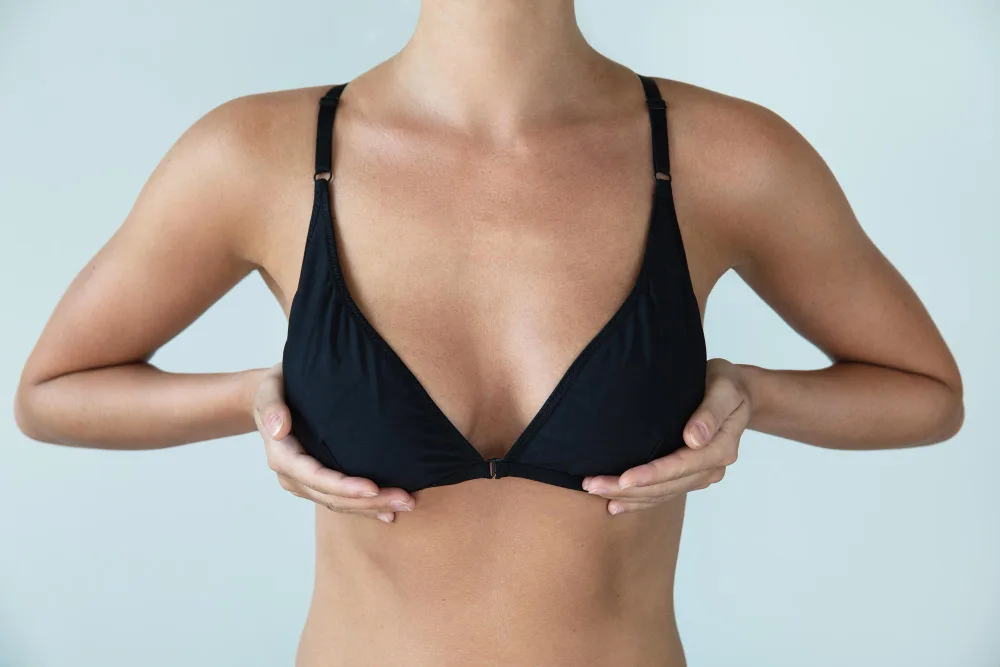
There is no such thing as perfect symmetry in women’s breasts. They are like sisters rather than twins and, like our feet or hands, differ in size or shape. At first glance, however, we hardly notice. Sometimes they have also changed over time, for example because of an illness. The reasons are varied. Medically, though, it is not a problem if the left breast is somewhat fuller than the right or one nipple sits slightly higher than the other.
If the difference is very large, however, or bothers you so much psychologically that your self-esteem suffers, you may want to consider a correction. At my practice in Frankfurt am Main, I have specialized in breast surgery, among other things, and I am happy to advise you on how breast asymmetry can be corrected in your specific case.
When do we speak of breast asymmetry?
The medical term for an asymmetric breast is anisomastia. It is present when there is a clearly visible difference in the shape of the breasts or when the size difference amounts to at least a full cup size. The position can also differ. The specialist literature assumes that around a quarter of all women have a developmental breast asymmetry that goes beyond natural variation.
Where anisomastia becomes a problem, however, is ultimately always drawn by personal perception. I therefore first ask my patients at the appointment in my practice what exactly bothers them. Does the bra fit poorly on one side, for example? Or does the uneven shape or size bother them in some other way? In my experience, there are women who suffer greatly from a very slight asymmetry, while others had no problems at all for many years with a more pronounced anisomastia. I take both seriously and try to find the best solution in each case.
Where do uneven breasts come from?
There are various causes. As so often, the most common reason is genes. The size of the breasts, as well as their shape and position, is inherited from mother and father like many other physical traits. If breast malformations are more common in the family, the risk of inheriting them is high.
The second-largest factor is hormones. During puberty, they drive breast growth. However, the breasts rarely grow in sync. Differences during this phase are therefore completely normal and in most cases even out by the end of puberty. In rare cases, a breast asymmetry remains after breast growth is complete.
Congenital breast malformations
Sometimes a congenital malformation of the breasts is responsible for a difference in shape or size. This includes, for example, the tuberous breast with its tube-like shape and enlarged areolas. Poland syndrome is very rare. It is characterized by the pectoral muscle (musculus pectoralis major) being underdeveloped or completely absent on one side. Depending on the source, the incidence is between 1 in 10,000 and 1 in 100,000.
Changes over the course of life
Genes or hormones are not always responsible for a difference in breast size. In some patients, the asymmetry is also acquired over the course of life, for example through:
- Pregnancy and breastfeeding: Both can change the breast considerably, for example if the baby prefers to feed on one breast. Sometimes the breasts also do not regress evenly after breastfeeding, so that a more or less pronounced asymmetry remains.
- Weight changes: Major weight gain or loss can also change the look of the breast and make it appear uneven, for example because it gains more volume on one side or, with weight loss, loses more volume on one side.
- Illnesses: In some patients, the difference in size or shape is due to an illness such as breast cancer. Often a lot of tissue around the tumor has to be removed during surgery, which can make the two breasts look different.
- Aging process: Age also plays an important role. Over the years, the tissue changes and volume is lost. This also rarely happens symmetrically, so differences in the shape and size of the breasts are not uncommon in older women.
When you should see a doctor about breast asymmetry
As a rule, uneven breasts are no compelling reason to see a doctor, especially if you have had your breast asymmetry since puberty or for many years. You should become alert, however, if the shape of your breasts suddenly changes, that is, if one breast clearly grows or changes shape over weeks or a few months. Something like this should always be medically evaluated.
According to studies, there is a certain connection between asymmetries and breast cancer. However, these studies are somewhat older and final proof is still pending. No reason for panic can be drawn from the data. But it is a good reason to attend your screening appointments.
In many women, an asymmetry in shape or volume also affects the mind. From experience, I know that breasts of different sizes gnaw at the self-confidence of many women. They do not feel comfortable in their skin and have problems buying clothes or getting them to fit. In some women, this even has a negative effect on their sex life. In such cases, it can make sense to consider breast surgery to correct the asymmetry, that is, to even out the breasts.
What helps against breasts of different sizes?
That depends on how much the uneven breasts affect you. If the difference in shape or size hardly limits you in everyday life or otherwise and at most means that your bra does not fit optimally, a visit to a specialty store is often enough in my experience. The trained sales staff can usually quickly find a bra that compensates for the difference, if necessary with a removable insert. For most women, that is entirely sufficient.
What definitely does not help against uneven breasts are supposed miracle remedies and exercises that often circulate on social media such as Instagram or TikTok. Some of them even pose a serious health risk, so you should steer clear of them.
- Chest muscle training: This persistent myth originally comes from fitness guides for men with uneven chest muscles. The female breast, however, consists of glandular tissue and fatty tissue and lies on top of the muscle. Push-ups and other exercises unfortunately do nothing here. They cannot do any harm either (like exercise in general).
- Creams, capsules and massages: You unfortunately cannot achieve a correction of your uneven breasts with these either. On the contrary: with some capsules, it is uncertain which ingredients they actually contain, as they come from questionable channels. Do not take that risk in the first place.
- Hormone products: Taking hormones on your own is at least as risky as swallowing questionable pills from the internet. You interfere with a very sensitive control loop and risk serious health consequences.
- Deliberately gaining weight: This works just as little as, for example, deliberately losing weight on the stomach. Usually both breasts grow along and the breast shape stays the same. Gaining weight also puts strain on your entire body and creates new risks.
A reliable and lasting correction of breast asymmetry is only possible with the help of plastic and aesthetic surgery. Depending on the individual findings, various procedures come into question. At my practice in Frankfurt, I offer the following treatment options, among others:
One-sided breast augmentation
If a lot of breast tissue is missing on one side (e.g. due to tumor surgery), this difference can often be compensated well by inserting an implant on one side. Occasionally I also insert implants of different sizes on both sides if you want more breast volume overall. You can learn more about breast augmentation on the treatment page.
Autologous fat (lipofilling)
Treatment with your own fat is an option for moderate differences. In so-called lipofilling, I take fat from body areas such as the hips, process it and inject it into the breast. The nice thing about this treatment option is that the breast feels very natural afterward. However, the body breaks down part of the fat again, so repeat treatment is sometimes necessary. You can find out more on the treatment page on breast augmentation with fat transfer.
One-sided breast reduction
If the larger breast causes you discomfort and you want it matched to the size of the smaller breast, I remove the excess tissue in one procedure and then lift the breast. For a harmonious appearance, I often also reposition the nipple. You can find more information on the treatment page on breast reduction.
Breast lift
If one of your breasts sags more than the other, a breast lift is often a good option. In so-called mastopexy, I raise the sagging breast, remove the excess tissue, tighten the entire glandular tissue and move the nipple upward. You can find all the details about the breast lift on the treatment page.
What you should know before a corrective breast surgery
Unfortunately, I cannot promise you one hundred percent symmetry. The goal of an adjustment is always a result that relieves you and with which you are satisfied in everyday life. Small differences often remain because your rib cage itself is built asymmetrically. In addition, your breast can change again after surgery through weight gain or another pregnancy. Ideally, you should have completed your family planning and have maintained your weight for some time.
Timing is also important. Before a surgical procedure, the breast should be fully developed. I therefore treat asymmetries at the earliest between the ages of 18 and 21. Before every procedure, I also insist on an ultrasound examination or, alternatively, a mammogram. Only in this way can abnormalities be detected and not overlooked when tissue is removed.
Let’s talk about your breast asymmetry
I perform all of the procedures mentioned at our affiliated clinic in Frankfurt under general anesthesia. Which of the methods makes sense for you, we clarify in a personal consultation at my practice.
On site, I can get a picture of the asymmetry myself and recommend the right approach for breast matching. I am generally very realistic and recommend only what I also consider sensible from my aesthetic experience and what suits you. Schedule an appointment now through my online form, by phone or by email.
Dr. Nichlos on Instagram & TikTok
Insights into everyday life at the practice, answers to frequently asked questions and useful information about plastic and aesthetic surgery: follow Dr. Nichlos so you do not miss anything.